How do we maintain data accuracy during ETL

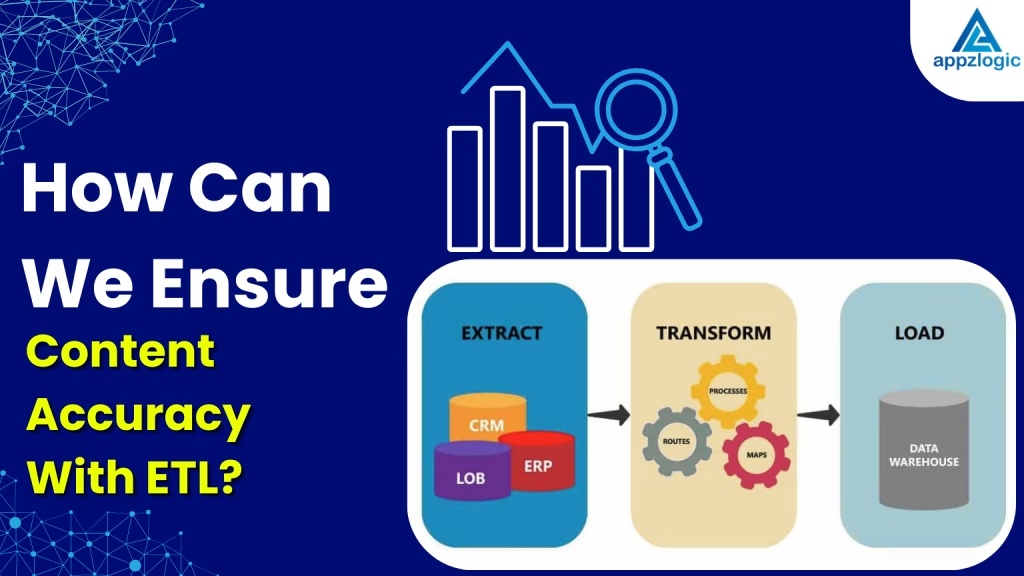
How Can We Ensure Content Accuracy With ETL?

ETL stands for Extract, Transform, Load. It is a process which is used in data management to collect information about data from different sources, change it into a useful format, and then move it to a storage system like a database or data warehouse. ETL helps businesses make sense of large amounts of data by cleaning and organizing it. One of the most important goals in ETL is to ensure that the data is accurate. If the data is not correct, business decisions based on it can lead to serious problems. That is why maintaining content accuracy in ETL is crucial. So, organizations can validate their data, maintain its quality, and ensure its integrity.

Why Content Accuracy Matters in ETL

The importance of content accuracy

Content accuracy means that the information we handle through ETL is complete, correct, and trustworthy. For example, imagine a company is using ETL technology to collect sales data. If the data is wrong, it might show fewer sales than occurred. This could lead to poor planning and lost revenue. Accurate content ensures that decision-makers can trust the data they see. It also helps in building reliable reports, dashboards, and forecasts. In industries like finance, healthcare, and logistics, even small errors can have a big impact. That is why companies must first understand business needs to design ETL processes that support accurate outcomes.

Step 1: Accurate Extraction of Data

The first step in ETL Software Testing is data extraction. To ensure accuracy here, we must connect to reliable data sources and use proper extraction methods. Sometimes, data sources are not always stable, or the structure may change over time. Using automated monitoring tools can help track these changes. Also, creating backups before extraction ensures that data is not lost. Checking logs during extraction is another useful way to catch any missing or corrupted data early in the process. Extraction, transformation and loading processes are a must for ETL.  

Step 2: Clean and Reliable Transformation

Transformation is the step where raw data is changed into a usable format. This stage is often the most complex and the most prone to errors. To keep content accurate, businesses must define clear rules for transformation. For example, dates should be in the same format, duplicates should be removed, and checking for missing values and setting rules for handling them is essential. Use of data validation rules and business logic during transformation ensures that the final data matches expectations.

Step 3: Careful Loading into Target Systems

Once data is transformed, it is loaded into a target system like a data warehouse. Here, it is important to make sure that data is not lost, duplicated, or wrongly mapped. Use of integrity checks, such as comparing row counts and validating key fields, is essential. It is also good practice to test the loading process on a small dataset before applying it to the full data. This helps catch any potential issues early. Proper error handling and logging also support maintaining accuracy in this step, especially when reconciling source and target data, verifying data integrity, and assessing transformation logic.

Implementing Data Quality Checks

Building data quality in ETL

To ensure data accuracy throughout the ETL pipeline, data quality checks are very helpful. These checks include completeness, uniqueness, consistency, and validity. For instance, you can set rules that customer IDs must always be unique, or that dates must follow a certain format. Automation tools can perform these checks regularly and alert you if there is a problem. Ultimately, these steps help validate their data, maintain its quality, and ensure its integrity. Specialized tools like Datagaps ETL Validator and Airbyte can streamline the validation process and ensure consistent validation across the ETL pipeline and etl developer ensures this.

Using Metadata for Better Accuracy

Metadata is information about your data, such as where it came from, what type it is, and how it has been changed. Managing metadata properly can improve content accuracy. With metadata, you can track the flow of data and understand its context. This helps identify problems when they happen and correct them quickly. Many ETL tools now come with built-in metadata management features that make this task easier. This added visibility into the ETL process leads to better control and fewer errors.

Monitoring and Logging for Accuracy

Ongoing monitoring is important for keeping your ETL process healthy and accurate. You should set up automated systems that log each step of the ETL process. These logs can show you where something went wrong and how to fix it. Alerts and notifications also help by warning you if there is an issue in real- time. Over time, analyzing these logs can show trends and recurring issues, which can be fixed for better accuracy in the future.

Testing and Validation Techniques

Data Quality assurance

Before going live with your ETL process, it is important to test it thoroughly. ETL testing is crucial for ensuring data accuracy. Testing should include unit tests for small parts of the process and end-to-end tests for the whole pipeline. You can also validate the output by comparing it with source data or expected results. Test cases should cover both normal and edge cases to make sure the system can handle unexpected data. Regular testing, even after the system is in use, ensures continued content accuracy as your data and systems evolve. For example: quality control publishing needs ETL validation. Regular testing, even after the system is in use, ensures continued content accuracy as your data and systems evolve.

Automation and Tools for Better Accuracy

There are many modern ETL tools that come with built-in features to help maintain data accuracy. Tools like Talend, Informatica, Apache NiFi, and Microsoft SSIS offer drag-and-drop interfaces, error handling, and real-time validation. Automation reduces human errors, speeds up the process, and ensures consistency. Machine learning and AI are also being used in advanced ETL tools to detect anomalies and improve accuracy even further. Choosing the right tool for your business needs can make a big difference when trying to validate their data, maintain its quality, and ensure its integrity.

Read more about: How Automation Testing with AI Improves Speed, Accuracy & ROI in QA

Regular Audits And Documentation

Conducting regular audits of your ETL process ensures that everything is running as expected. These audits can find hidden problems that might not be caught by automated systems. It is also important to maintain good documentation of your ETL workflows, rules, and data definitions. This helps new team members understand the system and makes troubleshooting easier.

Conclusion:

Ensuring content accuracy in ETL is not a one-time task as it is an ongoing process. From extraction to loading, every step must be carefully designed, monitored, and tested.  By following best practices and investing in the right tools and people, any business can achieve reliable and accurate ETL pipelines that validate their data, maintain its quality, and ensure its integrity.

If you want ETL solutions for your business, contact us today as we are the best ETL Testing provider for U.S. data platforms and across the globe.

Request a demo

Frequently Asked Questions

Accurate data ensures better decisions and avoids costly mistakes.

Use rules and validation steps to detect and handle missing values.

They verify data completeness, uniqueness, consistency, and validity.

Use integrity checks and test with small data sets first.

Regularly, especially when data sources or business rules change.

What are the Benefits of Automation in Publishing?

Publishing has changed a lot in recent years. What used to take hours of manual work by editors and designers is now much faster, thanks to automation in publishing and other automated solutions. For IT companies, especially those working for automation in the Publication Industry, this shift opens new doors. Automating tasks like formatting, content […]

Finance processes involve numerous tasks, multiple approvals, and strict compliance requirements, making them inherently complex and time-consuming. Organizations need a way to ensure that workflows are consistent, efficient, and transparent across departments while reducing errors and delays. Camunda BPM offers a powerful solution by enabling businesses to design, automate, and manage workflows using BPMN business process model and notation. With Camunda, finance teams can visualize processes clearly, implement automated tasks, and integrate workflows seamlessly with existing systems, improving overall efficiency and accuracy. By providing a structured framework for managing transactions, compliance checks, customer interactions, and reporting, Camunda simplifies the execution of finance processes, ensuring operations remain reliable, accountable, and easy to monitor. What is Camunda BPM? Camunda BPM is an open-source BPM platform built to execute and automate workflows created with BPMN. It enables organizations to design processes clearly, automate repetitive tasks, and manage complex workflows efficiently. Unlike traditional systems, Camunda offers flexibility, allowing businesses to adapt processes as their needs evolve without being tied to proprietary solutions. The platform is especially valuable for financial institutions because it supports critical operations such as compliance workflows, transaction monitoring, customer support processes, and regulatory reporting. Its seamless integration with existing systems through the Camunda API ensures that workflows operate smoothly across different departments and applications. By using Camunda BPM, organizations gain better control, transparency, and efficiency in their business processes, while also reducing risks and ensuring consistent performance across all operations. What is a BPMN Diagram? A BPMN diagram is the visual output of business process modeling. It shows tasks, events, and BPMN gateways that represent decision points in a process. For finance processes, these diagrams can illustrate how a loan request moves from submission to approval or rejection. Using a BPM platform like Camunda, financial organizations can move from static diagrams to executable workflows that directly integrate with systems and applications. What is BPMN in Business Analysis? Business analysts use BPMN because it provides a shared language for finance teams and IT departments, reducing miscommunication and ensuring everyone understands the same workflow. BPMN diagrams visually represent processes in a structured way, showing tasks, events, and decision points clearly. This makes it easier to identify inefficiencies, enforce compliance requirements, and uncover opportunities for automation using BPM automation tools. Beyond mapping processes, BPMN helps finance teams document workflows for audits, training, and continuous improvement. Analysts can track how tasks are performed, highlight repetitive steps that could be automated, and ensure that critical controls are in place. By using BPMN, organizations can align operational execution with strategic goals, monitor performance, and quickly adapt workflows as regulations or business priorities change. This approach supports transparency, accountability, and efficiency across all finance processes, helping teams deliver consistent results. Camunda Modeler The Camunda Modeler is a desktop application that allows users to design workflows using BPMN 2.0. When finance teams ask how to use Camunda Modeler, the answer is simple: it offers a drag-and-drop interface where you can design processes with tasks, events, and gateways.For instance, a financial compliance officer can use Camunda Modeler to build a process diagram for anti-money laundering checks. Once designed, the workflow can be deployed into the Camunda BPM engine, ensuring the process runs automatically. BPM Automation Tools in Finance Financial services require reliable BPM automation tools to handle high volumes of repetitive tasks. Camunda’s workflow automation ensures processes like payment reconciliation or fraud detection run consistently and accurately. Unlike traditional tools, Camunda does not act as a black box. Teams can monitor workflows in real time, adjust business rules, and continuously improve their models. This transparency is especially valuable in regulated industries where auditability is crucial. Camunda Workflow for Finance The Camunda workflow engine is the heart of execution. Once a business process model is created in the Modeler, the workflow engine ensures tasks are executed in order, data is routed correctly, and escalations happen on time. Camunda workflow is widely applied in loan application approvals, fraud detection checks, regulatory compliance reporting, and customer onboarding verification. With BPMN gateways, workflows can branch into different paths based on conditions, such as risk level or credit score. Camunda API for Integration One of the most powerful aspects of Camunda is its API design, which ensures that organizations can seamlessly connect their workflows with existing systems and applications. The Camunda API makes it possible for financial institutions to bring together multiple platforms, ranging from customer management systems and payment gateways to compliance and reporting solutions, into a single, unified process. This level of connectivity ensures that data moves smoothly across different departments, reducing silos and enhancing collaboration. We also use the Camunda API to help financial organizations to build integrated environments where workflows are not limited to a single tool but interact effortlessly with core banking platforms, regulatory systems, and enterprise applications. This approach provides finance teams with greater flexibility, visibility, and control, ensuring that their operations remain accurate. Business Process Modeling and Compliance Financial institutions operate under strict regulations, and ensuring compliance is a critical part of every workflow. Through business process modeling, organizations can embed compliance checks directly into their processes, making them an integral part of day-to-day operations rather than separate tasks. Using BPMN 2.0, rules and regulations are represented clearly and become part of the executable workflow, which ensures that every step follows established guidelines. This approach not only helps teams maintain accuracy and consistency but also provides transparency, making it easier to track processes and demonstrate compliance during audits. By integrating compliance into the workflow itself, financial organizations reduce the risk of errors or oversights, improve accountability, and create a system where regulatory requirements are consistently met across all operations. Camunda Enterprise Pricing When organizations consider adopting Camunda at an enterprise level, understanding Camunda enterprise pricing becomes important. While the open-source version provides robust workflow automation, the enterprise edition adds advanced capabilities such as dedicated support, enhanced monitoring tools, and greater scalability for large-scale operations. For financial institutions with high transaction volumes, complex compliance requirements, and critical regulatory obligations, the enterprise edition ensures that workflows remain reliable, secure, and efficient. By choosing enterprise features, organizations can manage processes confidently and maintain stability across all finance operations. Advantages of Camunda BPM Platform in Finance The BPM platform provided by Camunda offers multiple advantages for finance. Using business process model and notation, workflows become standardized across teams, ensuring clarity and consistency. The platform also provides transparency because workflows can be monitored in real time. Its flexibility is a major benefit as well, since through the Camunda API it integrates smoothly with core banking and compliance systems. Efficiency is improved as automated workflows reduce manual errors and delays, and scalability ensures that Camunda can serve both small financial teams and global banking organizations. How Finance Teams Use Camunda? Finance teams apply Camunda in multiple ways. Transaction approvals are automated with BPMN gateways, customer onboarding processes are enhanced through automated KYC checks, and compliance monitoring is handled by rule-based workflows.By combining business process modeling with automation, Camunda helps finance teams reduce costs while improving customer experiences. Conclusion Camunda BPM offers financial institutions a practical and efficient way to manage complex workflows, enforce compliance, and automate critical tasks. By using BPMN 2.0, organizations can clearly visualize processes, integrate systems through the Camunda API, and ensure that operations run smoothly and reliably. With tools like Camunda Modeler and BPM automation tools, finance teams gain transparency, control, and the ability to continuously improve workflows. At Appzlogic, we support organizations in including these capabilities and helping teams to implement Camunda effectively and ensuring that finance processes are not only automated but also aligned with operational and compliance requirements.

How Does Camunda Make BPMN Easier for Finance Processes?

Finance processes involve numerous tasks, multiple approvals, and strict compliance requirements, making them inherently complex and time-consuming. Organizations need a way to ensure that workflows are consistent, efficient, and transparent across departments while reducing errors and delays. Camunda BPM offers a powerful solution by enabling businesses to design, automate, and manage workflows using BPMN business […]

Easiest ways to Integrate payment mode in android app

How to Implement a Payment Gateway in Your Android App

Nowadays, easy and secure payment processes have become essential for any mobile app, particularly Android apps. Adding a payment gateway in an Android app not only enhances user convenience but also builds trust and boosts your app’s credibility. Whether it’s e-commerce, subscription services, or even digital wallets, integrating a payment gateway is a crucial step […]